B2B / brands
Different brands, different audiences, but too much communication coming through the same line. Creating, editing and publishing that content ourselves made visible what wasn’t right underneath.
The situation
One company with several brands, several audiences, but too much communication coming through the same line. That was the starting point, a few years ago.
We pulled that communication apart. Not to have more channels, but to let each brand speak more accurately to the audience it was meant for. At the same time, the company itself gained room to show its own role.
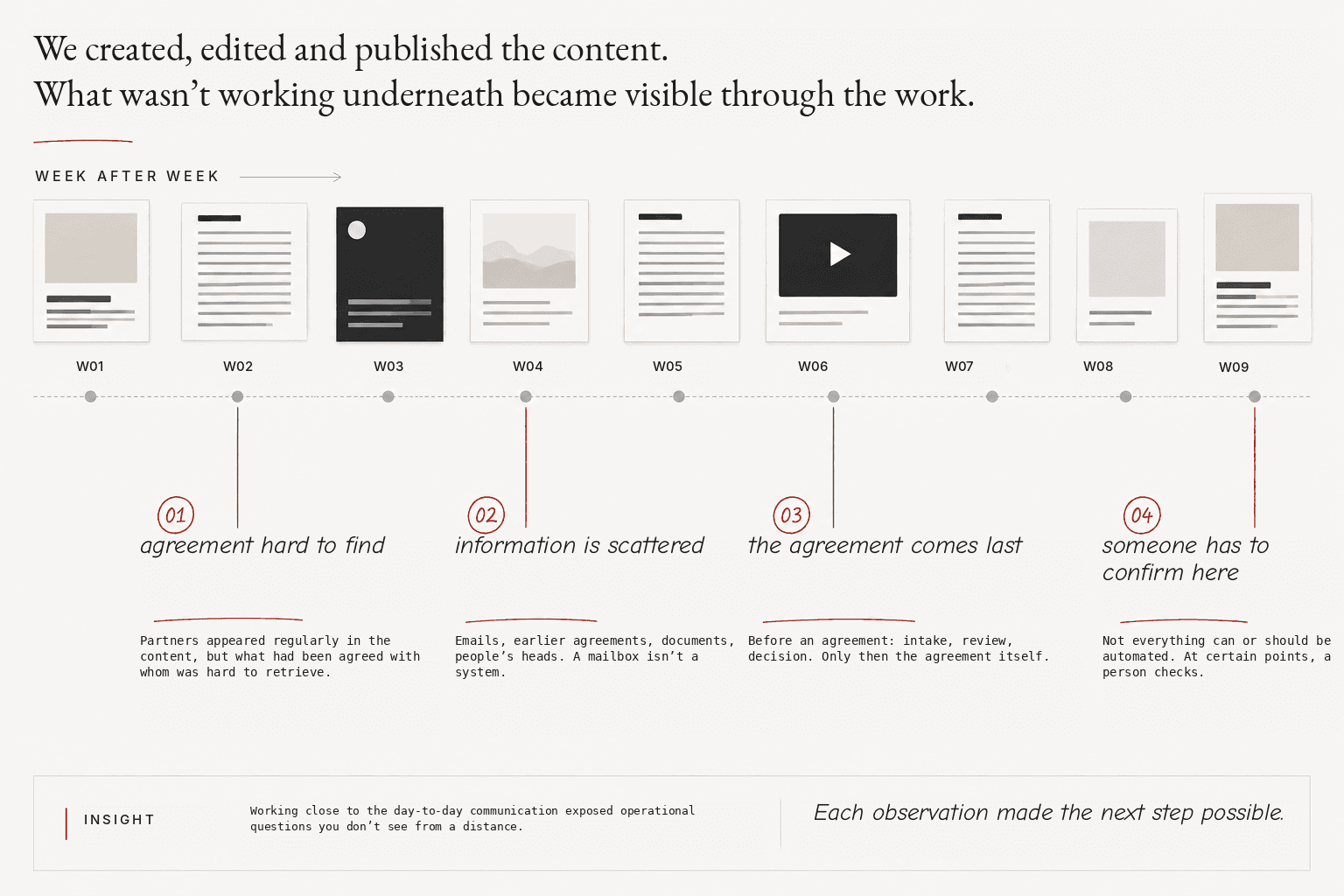
That choice didn’t stay stuck in a strategy. We created, edited and published the content ourselves. Week after week.
Because when you’re close enough to the day-to-day communication, you also see what isn’t right behind it.
The business question
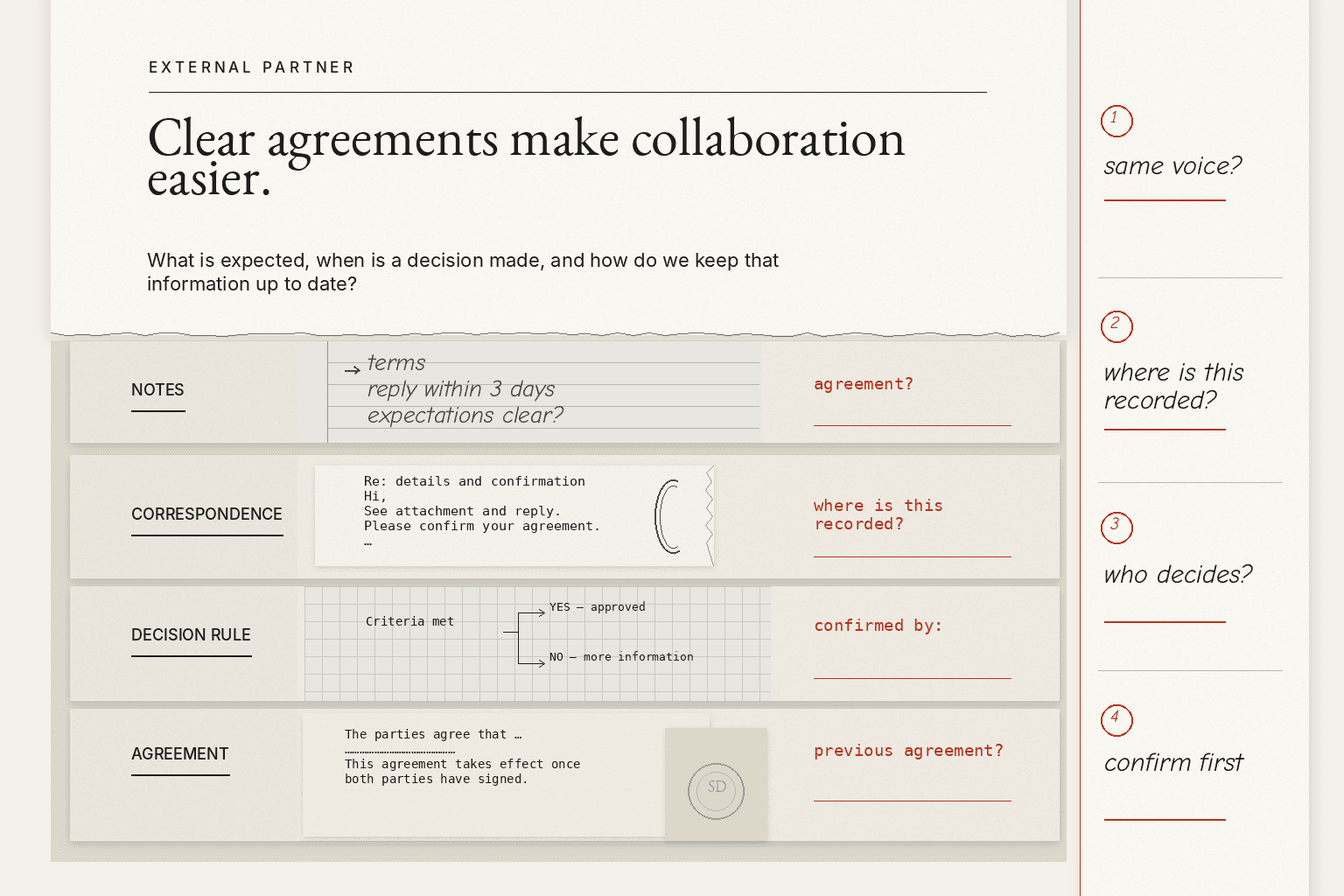
External partners regularly appeared in the content. It just turned out to be much harder to retrace what had been agreed, exactly, and with whom. What support did someone receive? What was expected in return? Which agreements still applied? And where was that recorded?
Out of that grew a clearer model, with different forms of support and clearer mutual expectations.
And that immediately made the next problem visible: the information was everywhere.
In emails. In earlier agreements. In documents. In people’s heads.
A mailbox is not a system for that.
The choices made
The existing contract process contained logic that couldn’t just be changed. Numbering and history had to stay consistent. Different rules determined what ended up in which document. Some data could be carried over, other data had to be deliberately checked by someone.
So first make the rules explicit.
Only then does automating make sense.
Execution
A contract turned out to be only the end of the line.

Before an agreement can be drawn up, someone has signed up, a profile has been reviewed, a decision has been made, and that decision has to be passed on correctly.
So that part was worked out too: a clear flow for the external partner and a separate internal environment for review, decisions, status and follow-up.
What was deliberately not done
Not all of it has to happen automatically. Where a piece of data can’t be reliably derived, someone keeps looking.
That’s exactly the point.
Result / impact
Handling communicates too.
For the person on the other side, there’s no hard line between marketing and administration.
They notice how they’re addressed. Whether a decision is clear. Whether an agreement is correct. Whether anyone knows what was agreed earlier.
There too, an impression of an organisation takes shape.
That path wasn’t mapped out like this in advance. Every step in the day-to-day work made something else visible that could be better.
We’re still working on it.