Insight
Thirty years of experience do not always get me to the answer faster. What they do is help me search with more purpose: seeing the relevant question sooner, adjusting an assumption in time and knowing when further digging is still worth it.
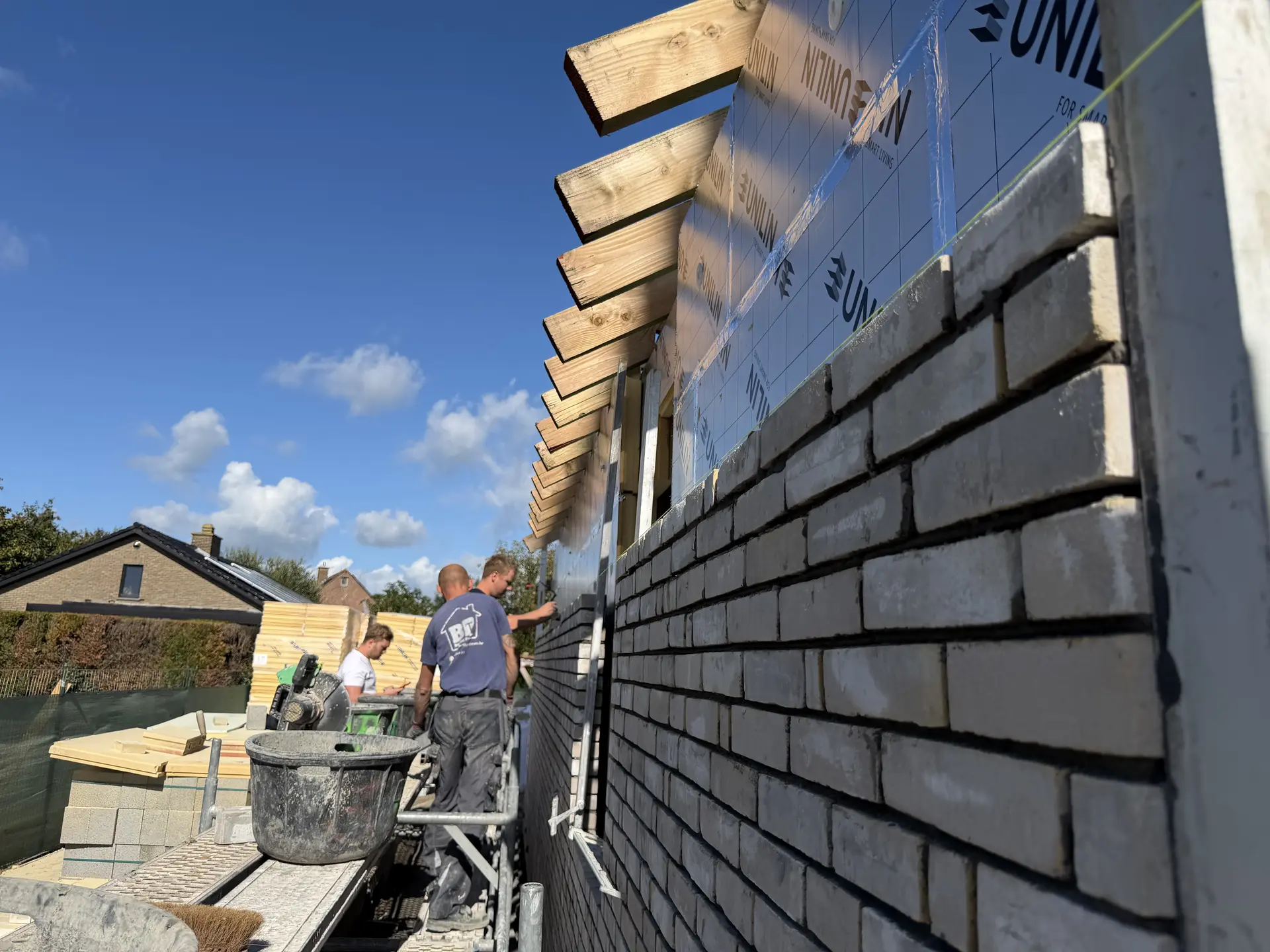
On a building site, you soon see whether materials, know-how and coordination fit together.
A LinkedIn post by Stijn Baert on the value of university master’s degrees got me thinking. Broadly, I agree with him. I took that academic route myself and it gave me a solid foundation. Still, one question stayed with me: if that education is valuable, does it follow that its content, structure and length are the best they can be today?
My first hunch was fairly firm: degree programmes often take too long and adapt too slowly. I had not looked into it. It was a useful place to start, though, because it made me examine my own reasoning.
From a conviction to a better question
If you are looking for efficiency, it is easy to conclude too quickly that a programme should be shorter. New tools make information quicker to reach and some learning tasks more efficient. But finding information faster is not yet learning better. A successful trial in one course does not prove that a whole master’s can be shortened without loss. And the fact that curriculum policy exists does not tell us that a change works better in practice.
The economic return on a degree does not settle the matter either. That a master’s has value does not tell us which content deserves more depth, what could be organised differently or how much learning effort remains necessary.
So my question about speed did not go away. It became more precise, and broader too. What can genuinely be done faster, or differently? Where is depth exactly what is needed? How do we test what works better? And how do we make sure a proven improvement reaches the programme in time, rather than sitting in a report?
For me, that is the heart of curiosity: wanting to find out which question makes the most difference right now. Knowing more is a means to that. This curiosity is a personal drive. Experience has not turned it into a procedure; it has given it direction. I need both.
Thirty years of experience have not made my questions smaller
After thirty years of work, I recognise some patterns sooner. I notice earlier where information is missing, where two explanations do not fit together or where a decision will have consequences further down the line. That can save time, but speed is not the main benefit for me. What matters more is that I can judge more precisely what still needs looking into and what is clear enough to act on.
Business questions rarely stay neatly inside one discipline. A commercial promise has consequences for delivery and for what people expect. A legal agreement has to be correct, and also understandable and workable. A new digital capability only becomes valuable when the whole way of working improves, for the people who use it and for those who receive the result.
That is why I often look just past the way a question was first worded. The aim is not to turn every practical problem into a strategy study. I simply want to avoid solving a communication question while creating a delivery problem, or drafting a watertight agreement that nobody can apply with ease.

Exploring a new possibility is the beginning. It only becomes valuable once it is understandable and usable in everyday work.
Curiosity without direction is not efficiency
Finding things out takes time. Anyone who always adds one more source, viewpoint or scenario can put off a decision indefinitely. Experience has a downside as well: quick recognition can tip over into tunnel vision. A familiar pattern then looks so convincing that information pointing the other way gets too little weight.
So curiosity needs to be contradicted. What information would undermine my first explanation? Whose voice is missing? Does the remaining uncertainty still matter to the decision? And once we know enough: what are we going to do now?
Efficiency, to me, is something other than answering as fast as possible. It lies in judging where further searching is still worth the time. Sometimes slowing down is wise, because a faulty starting point causes a lot of repair work later. Sometimes wrapping up is the better choice, because more analysis would no longer change the decision in any real way.
That judgement matters in execution too. Adjusting an assumption before it is fixed in a text, an agreement or a system is a very different thing from repairing everything afterwards. Here too, some modesty is in order: experience does not guarantee shorter lead times and does not make work flawless. Above all, it helps in choosing more deliberately where attention is needed.
The foundation and what you do with it
My academic education gave me a solid foundation of content, method, practice and feedback. In the years since, I have kept using and exercising that foundation in my work: connecting knowledge, taking arguments apart, seeing consequences across disciplines and not settling too quickly for a plausible answer. It is not possible to untangle precisely everything that has shaped that foundation and the way I work.
Curiosity does not replace that foundation, any more than it replaces expertise, sound research or practice. Nor is it reserved for people with a university degree. Its value lies in the combination: knowing enough to see the relevant connections, staying open enough to doubt a familiar explanation, and judging practically enough to reach a decision and carry it out.
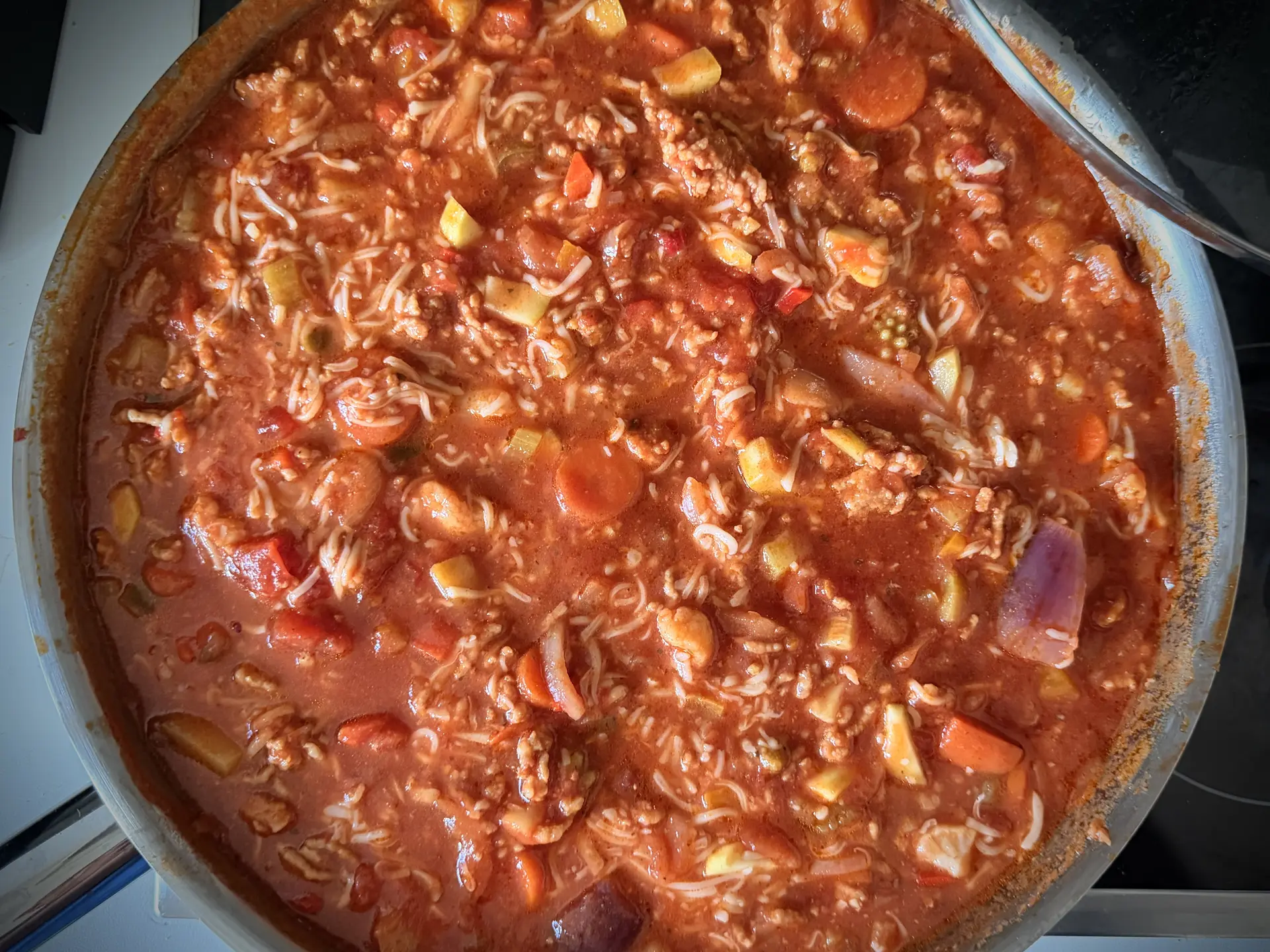
Curiosity does not stop where work stops. Cooking, too, is trying, tasting and adjusting.
That may be why experience has not made my curiosity any smaller. The more context I build up, the better I see how much a question changes when you look at it from another field. Not every side road is useful, and not every new possibility deserves to be applied. But one well-chosen extra question can keep us from solving the wrong problem with great conviction.
My hunch about the length of degree programmes has therefore neither been simply confirmed nor disproved. Research and challenge made the question more precise: what can be faster, what needs greater depth, how do we test it, and how do we turn proven improvement into action in time?
For a business question, that means something concrete: investigate with purpose, preserve coherence and conclude in time. From commercial choices and legal agreements to communication and execution. Not searching for its own sake, but knowing when to look further and when to carry the line through to what actually needs to happen.
Source note: this reflection starts from a public LinkedIn post by Stijn Baert on the value of university master’s degrees and links to his opinion piece in De Standaard. This article does not draw any substantive claims from the full paywalled text or the underlying study.
On LinkedIn, Dominiek develops this reflection further in an article in Dutch.
← All insights